Abrams M1A2

The Abrams M1A2: A Modern Powerhouse in Main Battle Tanks

The Abrams M1A2: A Modern Powerhouse in Main Battle Tanks

Introduction
The Abrams M1A2 Main Battle Tank symbolizes the forefront of military innovation, seamlessly blending advanced technology with unmatched durability. Serving as a critical asset to the United States Army, the M1A2 stands as a testament to engineering excellence on the global battlefield.

Robust Armor and Defense

Unmatched Protection
The core strength of the Abrams M1A2 lies in its advanced composite armor. Integrating layers of depleted uranium, this armor offers exceptional defense against modern threats, ensuring the safety of the crew and the success of the mission in the most challenging conditions.

Precision Firepower

The 120mm M256 Cannon
Central to the M1A2's impressive arsenal is its formidable 120mm M256 smoothbore cannon. Celebrated for its accuracy and power, this weapon is supported by state-of-the-art targeting systems, including thermal imaging and laser rangefinders, allowing for precise engagement across a spectrum of targets.

Technological Superiority

Network-Centric Warfare
Engineered for the demands of modern combat, the Abrams M1A2 boasts cutting-edge digital systems that facilitate real-time data sharing and enhance battlefield awareness. Its interoperability with other military assets ensures it plays a pivotal role in network-centric warfare strategies.

Conclusion
Representing the epitome of armored warfare, the Abrams M1A2 is a powerful testament to military ingenuity and strategic prowess. Its ongoing evolution highlights the critical importance of technological advancement in maintaining global defense leadership.
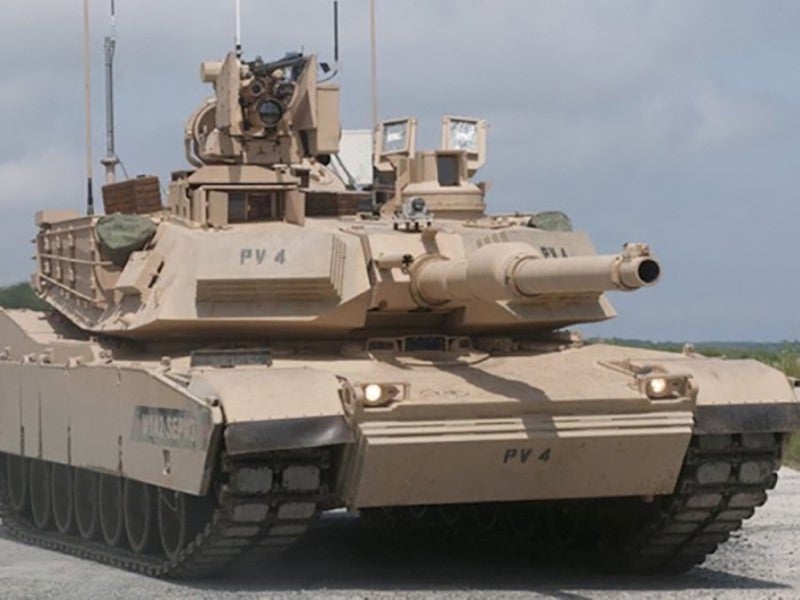
Abrams M1A2

Sukhoi Su-24

The Sukhoi Su-24 (NATO reporting name: Fencer) is a supersonic, all-weather attack aircraft developed in the Soviet Union. The aircraft has a variable-sweep wing, twin-engines and a side-by-side seating arrangement for its two crew. It was the first of the USSR's aircraft to carry an integrated digital navigation/attack system.
The Su-24 has a shoulder-mounted variable geometry wing outboard of a relatively small fixed wing glove, swept at 69°. The wing has four sweep settings: 16° for take-off and landing, 35° and 45° for cruise at different altitudes, and 69° for minimum aspect ratio and wing area in low-level dashes. The variable geometry wing provides excellent STOL performance, allowing a landing speed of 230 kilometers per hour (140 mph), even lower than the Sukhoi Su-17 despite substantially greater take-off weight. Its high wing loading provides a stable low-level ride and minimal gust response.
The Su-24 has two Saturn/Lyulka AL-21F-3A after-burning turbojet engines with 109.8 kN (24,700 lbf) thrust each, fed with air from two rectangular side mounted intakes with splitter plates/boundary-layer diverters. Initial Su-24s had basic electronic countermeasures (ECM) equipment, with many Su-24s limited to the old Sirena radar-warning receiver with no integral jamming system. Later-production Su-24s had more comprehensive radar warning, missile-launch warning, and active ECM equipment, with triangular antennas on the sides of the intakes and the tip of the vertical fin. This earned the NATO designation "Fencer-C", although again it did not have a separate Soviet designation. Some "Fencer-C" and later Su-24M ("Fencer-D" by NATO) have large wing fence/pylons on the wing glove portion with integral chaff/flare dispensers; others have such launchers scabbed onto either side of the tail fin.

compiled by XENOCIDE